Nusa Penida Full Day Tour:…
Nusa Penida Full Day Tour: How to Make Every Stop Count Planning…
If you have already spent several days visiting Bali’s beaches and popular temples, a Bali Coffee Plantation Tour can offer a completely different experience. Instead of rushing between major attractions, you spend time in the countryside, surrounded by coffee plants, tropical gardens, village landscapes, and local farming areas.
For many travelers, the interesting part is not simply drinking Balinese coffee. It is seeing how coffee is grown and processed, learning about local agricultural traditions, and understanding why coffee production is an important part of Bali’s highland communities.
A plantation visit can also fit naturally into a wider day trip, particularly around Ubud, Tegallalang, and Kintamani.

Bali’s coffee-growing regions have different growing conditions, so the character of the coffee can vary depending on the area, altitude, processing method, and roasting.
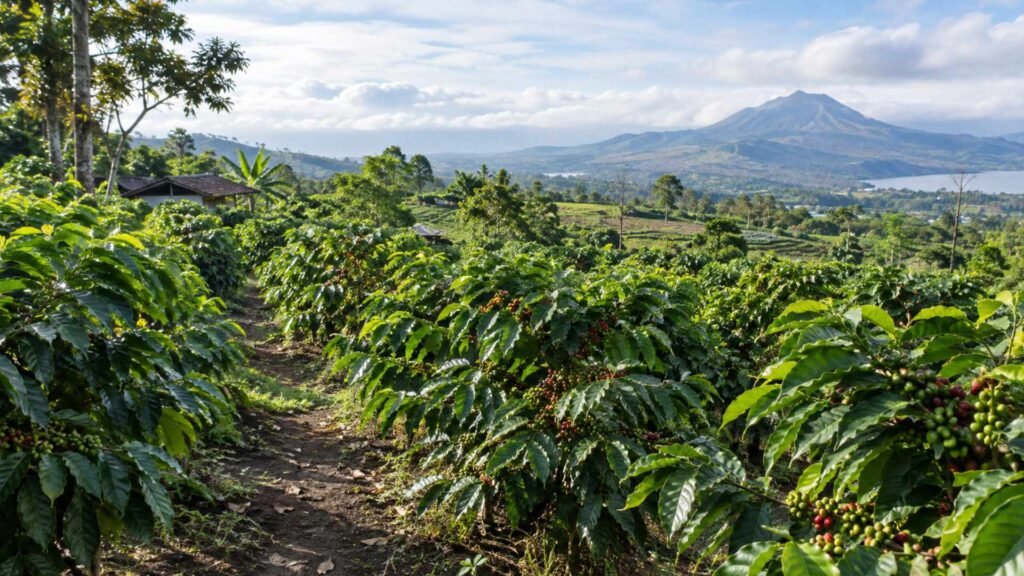
The Kintamani area is particularly associated with Arabica coffee. Coffee is traditionally grown alongside other crops, including citrus, in the volcanic highlands around Mount Batur.
This agricultural combination creates a landscape that feels very different from southern Bali. Instead of busy roads and large resorts, you will find gardens, farms, villages, and mountain scenery.
That contrast is one reason a plantation visit can be a worthwhile addition to a Bali itinerary.
Don’t expect every plantation to provide exactly the same experience. Some are designed primarily for visitors, while others have a stronger agricultural focus.
A typical visit may introduce you to several stages of coffee production.
First, you may see the coffee plants themselves and learn how the cherries develop. A guide can explain when the fruit is considered ready for harvesting and how the beans are separated from the fruit.
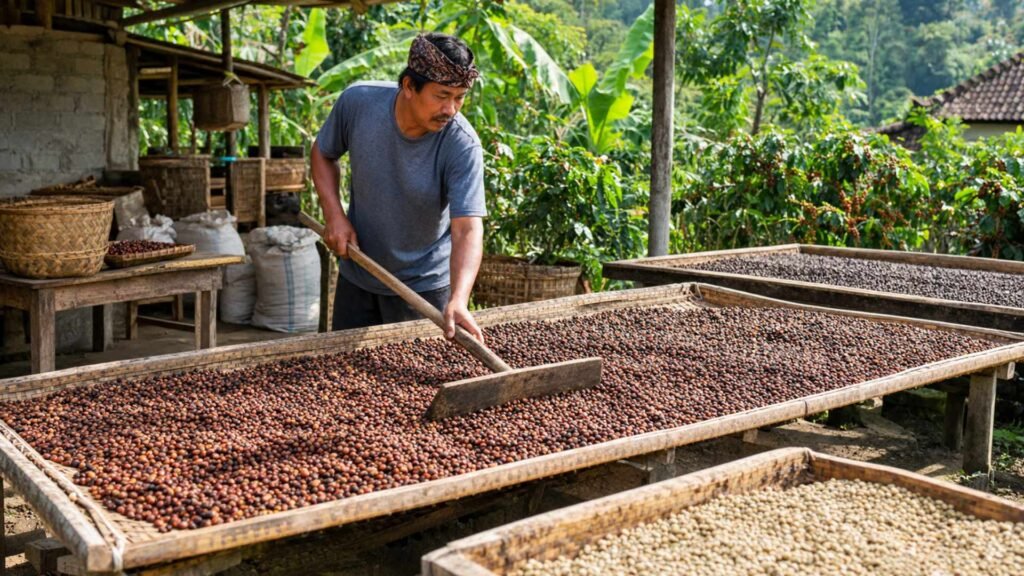
You may then see examples of drying, roasting, grinding, and brewing.
The final tasting allows you to compare different drinks and preparations. Some plantations also serve herbal drinks made from locally grown ingredients.
The experience is generally informal, so it is worth asking questions rather than simply walking through the plantation.
Your choice largely depends on the rest of your itinerary.
Ubud is convenient for travelers who want to combine coffee with Balinese culture and countryside attractions.
A plantation visit can be included alongside Tegallalang Rice Terrace, Tirta Empul, Gunung Kawi Sebatu, or other attractions around central Bali.
This works particularly well for travelers staying in Ubud because the plantation becomes one stop within a larger day rather than a separate long-distance journey.
The surrounding countryside also provides plenty of opportunities for photography.
Kintamani is better suited to travelers who want a highland experience.
The area around Mount Batur is known for its agricultural landscape, cooler conditions, volcanic scenery, and coffee-growing communities.
You can combine a plantation visit with viewpoints overlooking Mount Batur and Lake Batur, followed by lunch in the highlands before continuing to another destination.
Because Kintamani is farther from the main tourist areas of southern Bali, a private car with a driver can make the route easier to manage.
One common mistake is trying to put too many attractions into one Bali day.
A better approach is to group destinations that are reasonably close together.
For example, an Ubud countryside day could begin with a morning coffee plantation visit, continue to a rice terrace, stop at a temple, and finish with lunch before returning to your hotel.
A Kintamani route could focus more on the highlands, combining coffee, mountain scenery, and local food.
If you are staying in Seminyak, Canggu, Kuta, Nusa Dua, or Sanur, remember that reaching central or northern Bali can take considerably longer than the map distance suggests because traffic conditions vary.
A private driver is useful when the itinerary contains several stops because you do not have to arrange separate transportation between every attraction.
There is no single month that guarantees the perfect plantation experience.
Bali has a tropical climate, and rain can occur even when the morning begins with clear skies. The highlands can also feel cooler and wetter than southern coastal areas.
For outdoor sightseeing, mornings are generally comfortable. Starting earlier also gives you more time to visit nearby attractions without having to rush later in the day.
If photography is important, morning light can work particularly well for plantation landscapes, leaves, coffee cherries, and mountain scenery.
During the rainy season, comfortable shoes with good grip are useful because plantation paths and rural roads can become wet or muddy.
Kopi Luwak is one of the products commonly associated with Indonesian coffee tourism.
However, travelers should not assume that every coffee plantation follows the same production practices. If you are interested in trying it, ask the plantation about its sourcing and animal-welfare practices before purchasing or tasting it.
You can also enjoy other locally produced coffees without choosing Kopi Luwak.
For many visitors, comparing ordinary Balinese coffee varieties and learning about traditional preparation methods provides enough of an experience without focusing exclusively on one specialty product.
A plantation gives you opportunities for photographs that are very different from Bali’s famous beach viewpoints.
Try photographing the coffee plants at eye level, close-ups of ripe cherries, traditional drying areas, roasting equipment, and cups of freshly prepared coffee.
Wide-angle photographs can show the relationship between the plantation and the surrounding countryside.
If workers are present, ask before taking close-up photographs. A simple request is more respectful and usually creates a better interaction with local people.
Avoid entering restricted growing areas simply to get a better photograph.
Because individual plantations operate differently, check the current details before leaving your hotel.
Confirm:
These details can change, particularly during holidays or periods of bad weather.
It is also worth checking whether the plantation is primarily an agricultural site, a visitor attraction, or a combination of both. That will help you set realistic expectations.
A coffee plantation is generally better treated as part of a sightseeing day rather than an immediate airport activity.
After arriving at Ngurah Rai International Airport, most travelers will first want to reach their hotel, rest, and then explore Bali.
If your arrival time allows it, however, a private airport transfer can be combined with a planned stop only when the route and luggage arrangements make sense.
For a dedicated plantation experience, a separate day is usually more comfortable.
Yes, but it is better to keep the mainland Bali and Nusa Penida portions of your trip organized separately.
Nusa Penida requires reaching a harbor and taking a fast boat, so adding a coffee plantation visit to the same day can create unnecessary timing pressure.
A better plan is to explore a coffee plantation during your Bali mainland itinerary and reserve another day for Nusa Penida.
If you are planning both destinations, arranging your Bali transportation, airport transfer, fast boat, and private Nusa Penida tour in advance can make the overall itinerary easier to coordinate.
This experience is particularly suitable for travelers who enjoy:
It may be less interesting for someone whose main goal is spending every day at the beach or visiting nightlife areas.
The biggest advantage is flexibility. You do not need to spend an entire day at a plantation. It can be a short but meaningful stop within a broader Bali itinerary.
If you want to keep the day relaxed, consider this type of route:
Morning: Pick up from your hotel and travel toward the Ubud countryside.
Late morning: Visit a coffee plantation, walk around the agricultural area, and take part in a tasting.
Midday: Continue to a nearby rice terrace or local restaurant.
Afternoon: Visit a temple, village, or another countryside attraction.
Evening: Return to your hotel before the roads become busier.
The exact order should depend on your hotel location, traffic, weather, and the attractions you want to visit.
A coffee plantation is not something you need to visit simply because it appears on a Bali sightseeing list. Choose one if you genuinely want to understand another part of the island.
The best experience comes from combining the plantation with the surrounding countryside rather than treating it as a quick coffee-shopping stop.
For travelers who want more control over the route, Bali private transportation can be a practical option. A local driver can help connect a plantation with nearby attractions while allowing you to adjust the day when traffic or weather changes.
And if your holiday also includes Nusa Penida, keep enough time between the mainland itinerary and your fast boat journey. Bali is compact on a map, but travel times can change significantly depending on the road and time of day.
A thoughtfully planned Bali Coffee Plantation Tour can therefore be a simple way to experience Bali beyond its famous beaches. You get to see agricultural landscapes, learn about local coffee traditions, taste products grown in the region, and spend time in a quieter part of the island.
It depends on the plantation. A visit may include a plantation walk, an explanation of coffee production, demonstrations, and coffee or herbal drink tasting. Always check the current arrangement before visiting.
Coffee-growing areas can be found in several parts of Bali. Ubud and Kintamani are particularly convenient for travelers because plantation visits can be combined with other countryside attractions.
A short visit may take around an hour, while a more detailed agricultural experience can take longer. The actual duration depends on the plantation and activities offered.
Yes. A plantation can be included with attractions such as rice terraces, temples, waterfalls, and other countryside destinations around Ubud.
No. You can enjoy Balinese coffee without trying Kopi Luwak. If you choose to taste it, ask about the source and animal-welfare practices before purchasing.
Read Bali travel blog and news featuring tour tips, destination guides, local culture, and the latest updates from Bali & Nusa Penida
Nusa Penida Full Day Tour: How to Make Every Stop Count Planning…
Jimbaran Seafood Dinner: How to Plan a Relaxed Evening in Bali A…
Best Hotels in Nusa Penida for Every Traveler Choosing the best hotels…