Nusa Penida Full Day Tour:…
Nusa Penida Full Day Tour: How to Make Every Stop Count Planning…
That is one reason a Bali Turtle Island Tour can be interesting for travelers who want something different from the usual Bali sightseeing route.
Imagine spending a morning in Bali without rushing between famous beaches, waterfalls, and temples. Instead, you head toward the coast, visit a turtle conservation center, see a local island community, and have time to enjoy the surroundings.
The name “Turtle Island” can be confusing because Bali has more than one turtle-related attraction. Serangan Island in South Denpasar is strongly associated with turtle conservation, while Tanjung Benoa has another tourist attraction commonly known as Turtle Island. They are different experiences, so it is worth checking which one is included when arranging a tour.
For travelers interested in conservation, local life, and a less conventional Bali experience, Serangan is an especially useful place to explore.
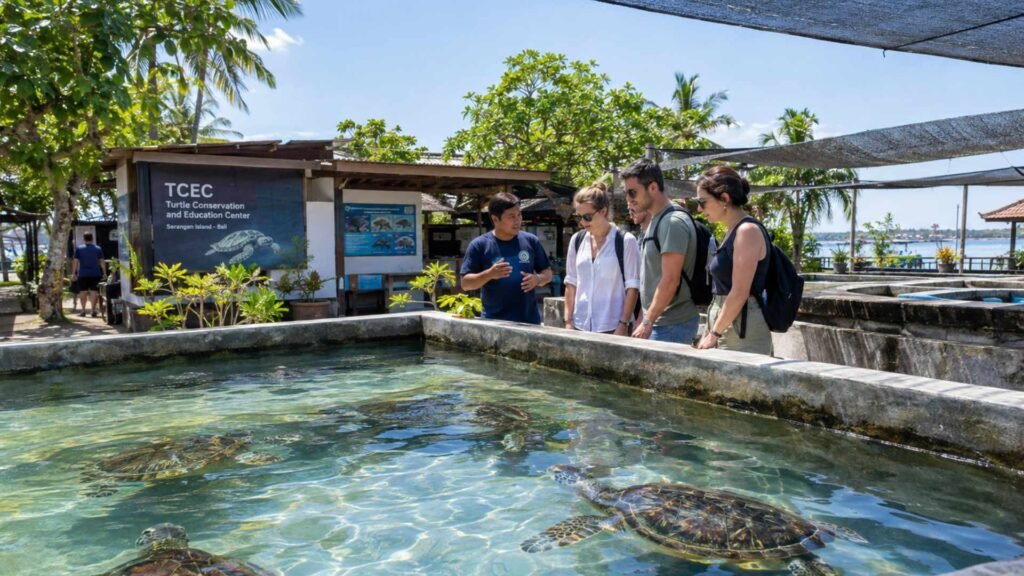
Serangan is a small island in southern Bali, connected to mainland Bali by a bridge. Its coastal environment and history have made it an important location for sea turtle conservation.
The Turtle Conservation and Education Center (TCEC) is one of the main attractions associated with this work. The center was established to support turtle conservation and education while involving the local community.
A visit is more meaningful when you treat it as an educational experience rather than simply a chance to take photographs with turtles. Visitors can learn about turtle protection, rehabilitation, hatchlings, and the difficulties sea turtles face in the marine environment.
Conservation activities can also vary according to the season and current conditions. Therefore, travelers should not plan their entire trip around seeing a particular activity unless it has been confirmed beforehand.
A turtle-focused trip does not necessarily have to take the whole day.
The conservation center can be the main stop, followed by time exploring other parts of Serangan. The island has a local atmosphere that feels different from the more developed tourism areas of Kuta, Seminyak, and Nusa Dua.
Depending on current availability, visitors can explore the coastal surroundings, learn about local fishing traditions, visit cultural sites, or look for places serving seafood.
This combination makes Serangan useful for travelers who enjoy experiences rather than simply collecting photographs of famous attractions.
Families may also find the conservation aspect particularly worthwhile because children can learn about marine animals while experiencing a different side of Bali.
One of the easiest things about visiting Serangan is that you do not need a fast boat from Bali.
The island is connected to mainland Bali, so the journey can be made by car or motorbike.
For tourists staying in Sanur, Serangan is particularly convenient. It can also be reached from Kuta, Jimbaran, Nusa Dua, Seminyak, Canggu, and other parts of southern Bali.
However, distance on a map does not always represent actual travel time in Bali. Traffic can change considerably during the morning commute, weekends, holidays, and busy periods.
For this reason, travelers with a fixed schedule should leave some extra time between Serangan and their next destination.
Serangan can also fit into an itinerary that starts or ends at Ngurah Rai International Airport.
For example, travelers with a late flight might prefer to spend part of their final day exploring southern Bali before heading to the airport. However, luggage and traffic need to be considered carefully.
If you have a flight to catch, avoid scheduling a long list of attractions immediately before departure. A private airport transfer combined with a short sightseeing plan can be more practical than trying to manage several separate taxis.
Travelers arriving in Bali can use the same approach in reverse: arrange airport transportation, check in at the hotel, and visit Serangan on another day when there is no pressure from flight times.
There is no single perfect month for a turtle-related visit because conservation activities depend on natural cycles as well as the center’s current program.
For general sightseeing, the drier months often provide more predictable conditions for outdoor activities. Nevertheless, Bali can experience short periods of rain even during the dry season.
The wet season can still be enjoyable, but travelers should allow flexibility. Heavy rain may affect road traffic and outdoor plans, while conditions can change quickly along the coast.
If you specifically want to see hatchlings, a release, or another conservation activity, contact the center before your trip instead of assuming it will happen on your chosen date.
You can keep your itinerary simple.
08:00 – Leave your hotel with a private car or other arranged transportation.
09:00 – Arrive around Serangan and visit the turtle conservation center.
10:30 – Continue exploring the local coastal area.
11:30 – Stop for lunch, with seafood being a natural choice in this coastal community.
12:30 – Visit another local or cultural attraction if time allows.
Afternoon – Return to your hotel or continue toward another southern Bali destination.
The schedule is only an example. Actual driving times and conservation activities should determine how much you try to include.

Serangan works well as part of a wider southern Bali day.
You could combine the visit with Sanur, particularly if you are already staying there or planning to use Sanur Harbor for a Nusa Penida trip.
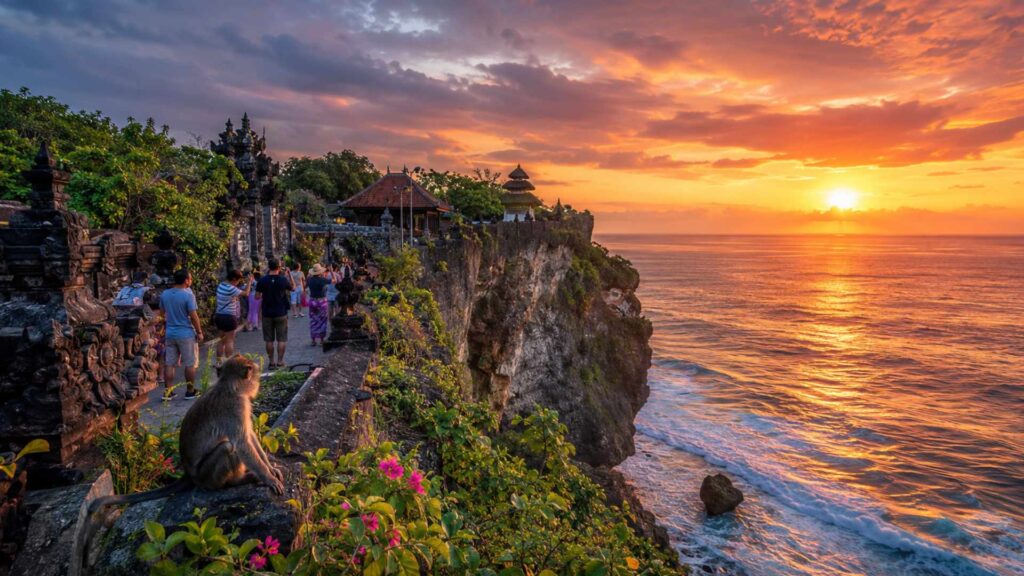
Another possibility is combining Serangan with cultural sightseeing around Denpasar. Travelers interested in Balinese temples can also consider visiting Pura Sakenan, an important temple on Serangan.
For beach lovers, the southern Bali coastline provides plenty of alternatives after the conservation visit.
The key is not to create an itinerary with too many distant destinations. Bali traffic can turn a short-looking route into a much longer journey, so grouping attractions by area usually creates a better travel day.
There is an important difference between seeing wildlife and interacting with wildlife responsibly.
Do not touch, feed, chase, or hold turtles unless staff specifically instruct you to do so. Follow photography rules and listen to conservation staff when they explain how visitors should behave around the animals.
If you are visiting with children, this is a good opportunity to explain why wild animals should not be treated like pets.
Responsible tourism also means understanding that not every turtle is available for visitors to handle or photograph. Some may be undergoing rehabilitation and need a quiet environment.
The most valuable part of the experience is often the information you take away about marine conservation rather than the photograph itself.
This depends on what you expect from your trip.
Serangan is a better fit if you are interested in conservation, local communities, culture, and a quieter coastal experience.
Tanjung Benoa is better known for its watersports and boat-based tourism, and its Turtle Island attraction is generally approached as a tourist excursion.
Neither option needs to be considered universally “better.” They simply offer different experiences.
Before booking a Bali Turtle Island Tour, ask the operator for the exact location and what activities are included. This simple step can prevent confusion caused by the shared “Turtle Island” name.
A Bali Turtle Island Tour makes the most sense for travelers who want to understand more about Bali beyond its famous beaches and Instagram locations.
Serangan gives you an opportunity to combine wildlife conservation with local culture, coastal scenery, food, and an easy road journey from southern Bali.
It is also flexible. You can make it a short half-day experience or include it within a larger southern Bali itinerary.
If you are staying in Bali and want to visit several destinations without constantly changing vehicles, private Bali transportation can make the day easier. A local driver can help organize the route around your hotel location, traffic, weather, and the places you actually want to visit.
And if Nusa Penida is also on your itinerary, Serangan can be planned separately from your Nusa Penida day rather than trying to squeeze both islands into one rushed schedule.
Before visiting, confirm current conservation-center arrangements and any activity you specifically want to see. Conditions, schedules, and visitor arrangements can change.
A good turtle experience should leave you with more than photographs—it should give you a better understanding of Bali’s coastal environment and the importance of protecting its marine wildlife.
The term can refer to different turtle-related attractions in southern Bali. Serangan Island is well known for its turtle conservation activities, while Tanjung Benoa has a separate attraction commonly called Turtle Island.
No. Serangan is connected to mainland Bali, so you can reach it by road. This makes it different from some boat-based Turtle Island experiences in Tanjung Benoa.
Possibly, depending on the season and current conservation activities. Hatchlings and turtle releases are not guaranteed every day, so check with the conservation center before visiting.
A half-day is usually enough for travelers who mainly want to visit the conservation center and explore nearby attractions. You can stay longer if you want to include cultural or coastal activities.
It is better to treat them as separate experiences. Nusa Penida requires a boat crossing and a dedicated travel schedule, while Serangan can be visited by road. Keeping them separate gives you more time and avoids a rushed itinerary.
Read Bali travel blog and news featuring tour tips, destination guides, local culture, and the latest updates from Bali & Nusa Penida
Nusa Penida Full Day Tour: How to Make Every Stop Count Planning…
Jimbaran Seafood Dinner: How to Plan a Relaxed Evening in Bali A…
Best Hotels in Nusa Penida for Every Traveler Choosing the best hotels…