Nusa Penida Full Day Tour:…
Nusa Penida Full Day Tour: How to Make Every Stop Count Planning…
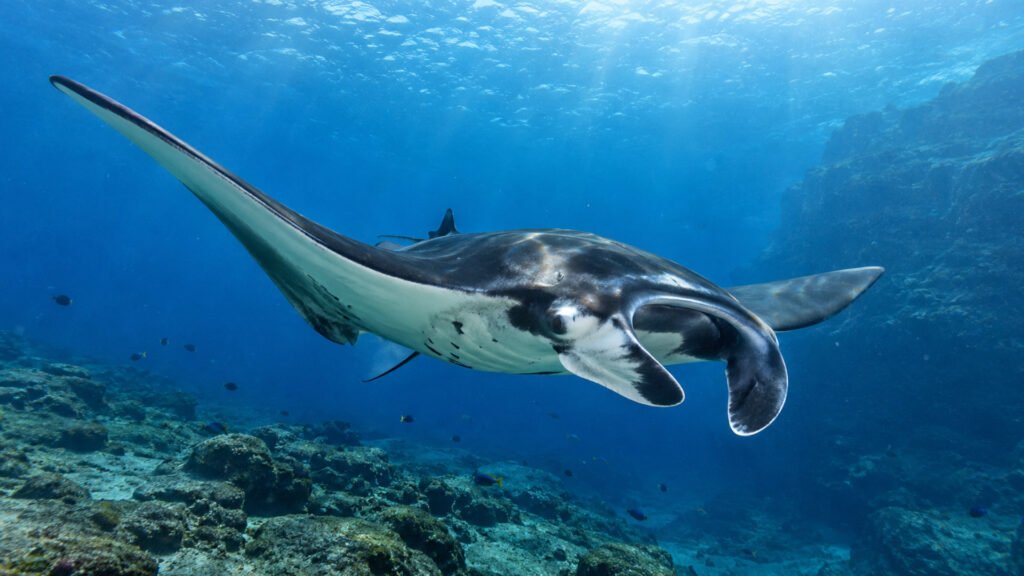
You can encounter manta rays around Nusa Penida at different times of the year, but choosing the right travel period can make your snorkeling experience more comfortable. Understanding the manta season Nusa Penida pattern also helps you plan your fast boat, snorkeling trip, and return journey without expecting wildlife sightings to follow a fixed schedule.
Manta rays are wild marine animals, so nobody can guarantee that you will see them on a particular day. Water visibility, currents, food availability, weather, and the location of the rays can all affect what happens during your trip. Therefore, the best approach is to choose a suitable season while keeping your itinerary flexible.

There is no strict beginning or ending date for manta season around Nusa Penida.
Manta rays live in the waters surrounding the island throughout the year. However, April to June is commonly highlighted as a useful period for manta encounters in published Indonesian tourism information. These months also fall within the transition into Bali’s generally drier part of the year.
That does not mean July, August, December, or any other month is automatically unsuitable. A manta can appear outside the commonly recommended period, while a trip during the recommended months can still have no sightings.
For travelers whose main purpose is to see manta rays, April, May, and June are sensible months to consider first. If your travel dates are fixed, however, there is no need to cancel your Nusa Penida plans simply because you are visiting outside those months.
Nusa Penida has a rich marine environment with reefs, currents, deep water, and areas where manta rays can feed and move through the surrounding ocean.
One of the best-known locations is Manta Point. It is part of the Nusa Penida marine conservation area, which protects a large section of the island’s surrounding waters. The conservation area also includes important marine tourism locations such as Crystal Bay, Toyapakeh, and Gamat Bay.
This protected environment is one reason visitors should treat a manta snorkeling trip differently from an ordinary swimming excursion.
The goal is not to get as close as possible to the animals. Instead, snorkelers should allow manta rays to control the distance and move naturally through the water.
For a traveler specifically interested in manta rays, April to June is a useful window to consider.
However, calling it the “best” period should not be interpreted as a guarantee. Marine wildlife does not operate according to a tourist timetable.
Your experience can vary considerably between two days in the same month. One morning may provide excellent visibility and a manta encounter, while another day may bring stronger currents or poor visibility.
This is why local sea-condition information is more useful than simply looking at a monthly calendar.
April to June: A good period to consider if manta sightings are your priority.
July to October: Bali’s generally drier period can provide attractive conditions for island travel, although sea conditions around Nusa Penida still change from day to day.
November to March: Wetter months can bring more variable weather and marine conditions, but manta encounters remain possible.
The important distinction is between seasonal probability and certainty. A season can be favorable without guaranteeing an encounter.
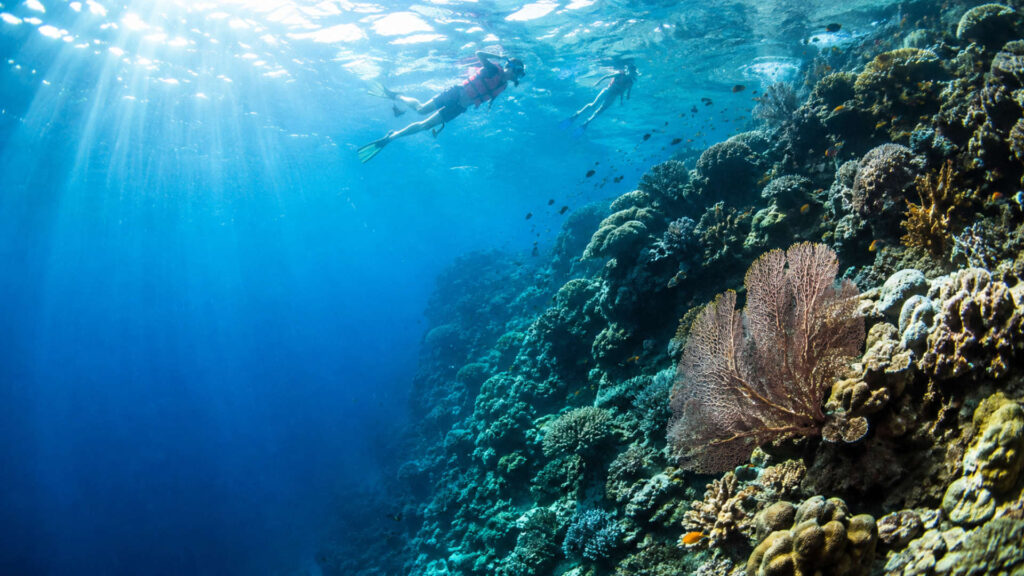
A regular Nusa Penida snorkeling trip may visit several marine locations depending on weather, currents, visibility, and the operator’s route.
A manta-focused experience has a different objective: spending time in an area where manta rays are known to pass or gather.
This makes the experience more dependent on nature. You might spend time in the water without seeing a manta, even though conditions look good.
If conditions permit, combining manta snorkeling with another snorkeling location can provide a more complete marine experience. Crystal Bay, Toyapakeh, and Gamat Bay are among the other well-known snorkeling and diving areas around Nusa Penida.
For most travelers staying in Bali, the practical starting point is Sanur.
Fast boats operate between Sanur and Nusa Penida, with the crossing commonly taking roughly 30–45 minutes depending on the boat, sea conditions, and operational circumstances.
The trip does not end when you arrive at the island. You still need transportation from the harbor to the snorkeling departure point or meeting location.
A typical travel day therefore looks something like this:
Bali hotel → Sanur Harbor → fast boat → Nusa Penida → local transport → snorkeling boat → manta snorkeling → return to the harbor → fast boat to Bali
This is why an early start is particularly useful for a snorkeling day trip.
Travelers staying in areas such as Ubud, Canggu, Seminyak, Kuta, or Nusa Dua should also allow enough time to reach Sanur before the required check-in time.
If you are arranging the trip independently, keep your Bali hotel location and fast boat departure time in mind before choosing a snorkeling schedule.
If manta snorkeling is one of the main reasons for visiting Nusa Penida, arranging the main transportation in advance is sensible.
However, avoid choosing an itinerary that leaves almost no flexibility.
The sea can influence the day’s route. A responsible local operator may change the snorkeling location when conditions are unsuitable rather than forcing the original itinerary.
Before booking, ask practical questions such as:
The last question is particularly important. No reputable operator can guarantee a wild manta ray encounter.
You do not need complicated equipment for a normal snorkeling trip, but a few items can make the day easier.
Bring swimwear, a towel, sunscreen, drinking water, and a waterproof bag for valuables. A rash guard can also be useful when spending several hours in the sun.
If you use an underwater camera, avoid chasing marine life simply to obtain a photograph. A manta ray may turn or swim away when a group gets too close.
For photography, patience generally works better than pursuit.
Let the animal approach naturally, keep your movements controlled, and listen to your guide’s instructions.
One of the biggest mistakes first-time visitors make is assuming that good weather in Bali automatically means perfect snorkeling conditions around Nusa Penida.
It does not.
Nusa Penida’s surrounding waters can experience currents and changing conditions. A calm-looking coastline does not necessarily represent conditions farther offshore.
For that reason, your boat crew and local snorkeling guide should have the final say on whether a particular location is appropriate that day.
If the planned manta area is unsuitable, changing the route can be the safer and more responsible choice.
Manta rays are wild animals, and responsible behavior helps protect the experience for future visitors.
Do not touch manta rays.
Do not chase them.
Do not block their path.
Do not attempt to ride them.
Avoid sudden movements and give the animals space to change direction.
These simple rules also improve your own experience. A relaxed manta moving naturally through the water is far more rewarding to observe than an animal trying to escape a group of swimmers.
Nusa Penida’s marine environment is valuable beyond tourism. The island’s surrounding waters are part of a formally protected marine area, making responsible visitor behavior particularly important.
If you are traveling from Bali specifically for manta snorkeling, avoid packing too many land attractions into the same day.
A realistic priority list would be:
Early morning: Hotel pickup and travel to Sanur.
Morning: Fast boat from Sanur to Nusa Penida.
Late morning: Transfer to the snorkeling departure point.
Midday: Manta-focused snorkeling, followed by another snorkeling location if conditions and timing allow.
Afternoon: Return to the harbor.
Late afternoon: Fast boat back to Bali.
Exact timing depends on the boat schedule, sea conditions, snorkeling operator, and your Bali accommodation.
If you want to add Kelingking Beach, Diamond Beach, Broken Beach, or other sightseeing locations, consider using a separate day. Trying to combine extensive land sightseeing with a marine-focused trip can make the schedule unnecessarily rushed.
If manta rays are high on your Nusa Penida wish list, April to June is a practical period to consider, but it should never be treated as a guarantee.
The more important principle is flexibility. Choose a suitable travel period, check current marine conditions, use a responsible snorkeling operator, and leave enough time between your snorkeling activity and your return fast boat.
Nusa Penida offers much more than manta rays. Even when wildlife does not cooperate, the island’s coastline, reefs, viewpoints, beaches, and local communities can make the journey worthwhile.
For visitors who prefer less complicated logistics, arranging a private Nusa Penida tour, fast boat, or Bali transportation together can make the travel day easier. The key is to build your itinerary around realistic travel times rather than trying to fit every attraction into one day.
April to June is a useful period to consider for travelers specifically interested in manta rays. However, manta rays can be encountered at other times of the year as well.
Yes. Manta rays are present around Nusa Penida throughout the year. Seasonal advice only helps with planning; it cannot guarantee a sighting.
Snorkeling conditions can vary considerably. Beginners should follow their guide’s instructions and only enter the water when the conditions and activity are appropriate for their experience level.
The fast boat crossing from Sanur commonly takes around 30–45 minutes, although actual travel time can vary according to the operator and sea conditions.
Manta sightings are never guaranteed because they involve wild animals. A good snorkeling itinerary can include other marine locations when conditions allow, so the trip does not depend entirely on finding a manta.
Read Bali travel blog and news featuring tour tips, destination guides, local culture, and the latest updates from Bali & Nusa Penida
Nusa Penida Full Day Tour: How to Make Every Stop Count Planning…
Jimbaran Seafood Dinner: How to Plan a Relaxed Evening in Bali A…
Best Hotels in Nusa Penida for Every Traveler Choosing the best hotels…