Nusa Penida Full Day Tour:…
Nusa Penida Full Day Tour: How to Make Every Stop Count Planning…
For many visitors, Temple Pura Tirta Empul is more than just another temple on a Bali itinerary. It is one of the island’s most important spiritual landmarks, where natural spring water has been used for purification rituals for more than a thousand years. Every day, Balinese Hindus gather here to pray, make offerings, and perform Melukat, a traditional cleansing ceremony believed to purify the body, mind, and spirit.
Located in the highlands of Gianyar Regency, about 30 minutes from Ubud, the temple combines history, architecture, religion, and natural beauty in one destination. Whether you come to admire its ancient courtyards or respectfully participate in the purification ritual, a visit to Tirta Empul offers a meaningful introduction to Balinese culture.
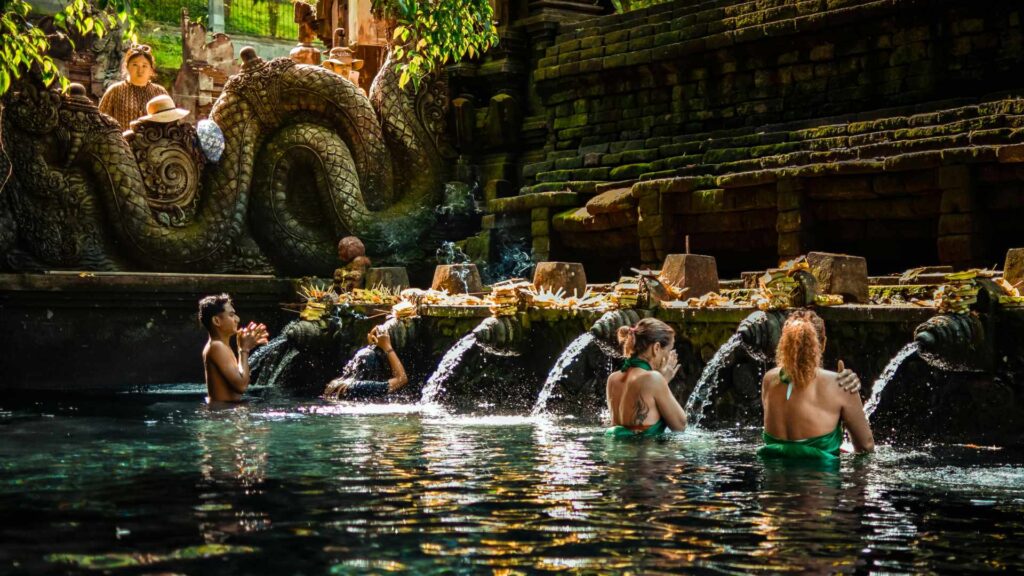
Unlike temples that serve mainly as historical monuments, Temple Pura Tirta Empul continues to function as an active place of worship.
The temple’s sacred spring supplies crystal-clear water that flows continuously into purification pools before being distributed to surrounding communities. For Balinese Hindus, this water symbolizes spiritual cleansing, gratitude, and harmony with nature.
During religious festivals, the temple becomes a gathering place for local families dressed in traditional ceremonial clothing, creating an atmosphere that reflects Bali’s living cultural heritage rather than a museum-like attraction.
Temple Pura Tirta Empul is located in Tampaksiring, Gianyar Regency, in central Bali.
Its convenient location makes it easy to combine with several popular attractions around Ubud and Kintamani.
Approximate driving times:
| Departure Area | Estimated Travel Time |
|---|---|
| Ubud | 30 minutes |
| Sanur | 1–1.5 hours |
| Kuta | 1.5 hours |
| Seminyak | 1.5–2 hours |
| Canggu | 1.75–2 hours |
| Nusa Dua | Around 2 hours |
| Uluwatu | Around 2.5 hours |
Traffic can be heavier during holidays and weekends, so leaving your hotel early is recommended.
The name “Tirta Empul” translates to “Holy Spring Water.”
According to Balinese Hindu tradition, the sacred spring emerged when Lord Indra pierced the earth to create healing water for his poisoned soldiers during a battle against the evil king Mayadenawa.
Today, the spring still flows naturally beneath the temple and feeds dozens of water spouts used during purification ceremonies.
For local worshippers, the water represents physical and spiritual renewal rather than simply a natural attraction.
Yes, visitors are welcome to participate respectfully.
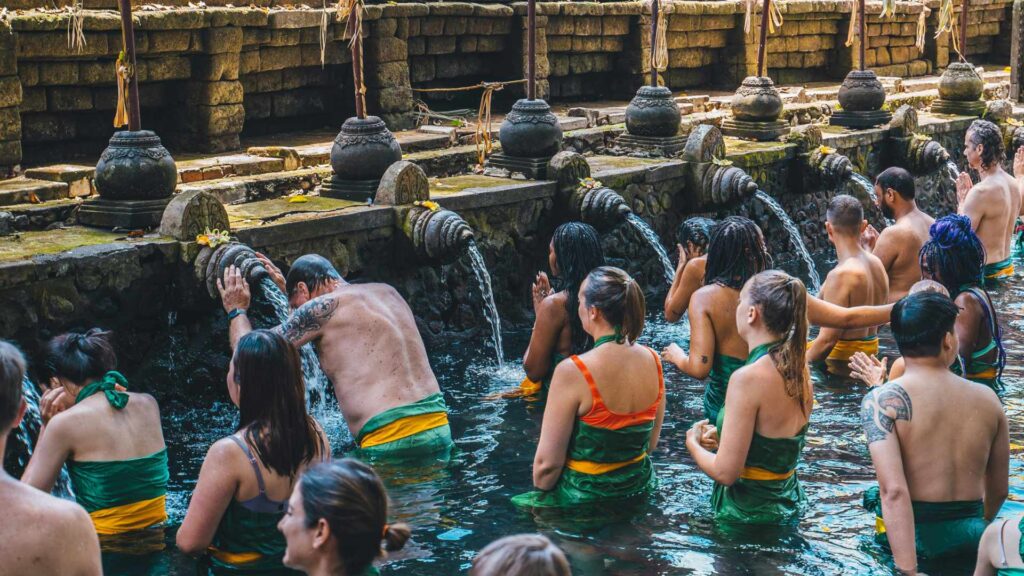
The Melukat ritual is a traditional purification ceremony that symbolizes letting go of negative energy while expressing gratitude and seeking inner balance.
Although many international visitors take part, it is important to remember that this remains a sacred religious practice rather than a tourist activity.
Before entering the purification pools, visitors should follow the guidance provided by temple staff or local guides.
If you decide to join the purification ritual, follow these simple guidelines:
Some fountains are reserved exclusively for specific ceremonies, including funeral rituals, so visitors should not use every water spout.
When in doubt, ask a temple guide for instructions.
Temple Pura Tirta Empul consists of several distinct sections.
This is the entrance area where visitors prepare before entering the sacred parts of the complex.
The purification pools contain rows of stone fountains supplied directly by the natural spring.
These pools are the temple’s most recognizable feature and remain central to daily religious life.
The innermost courtyard is reserved primarily for prayer and religious ceremonies.
Visitors are welcome to observe respectfully while following local customs.
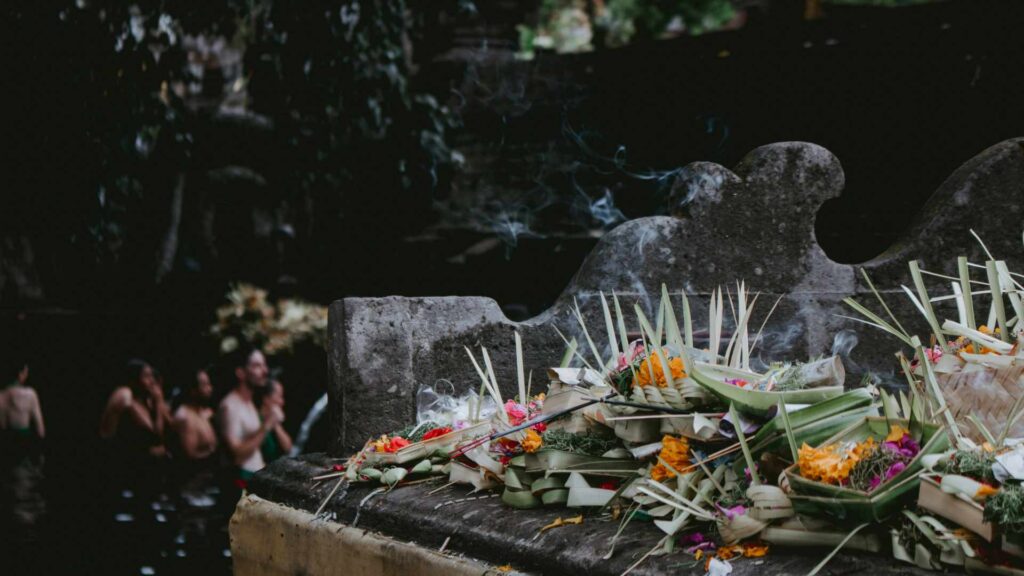
Throughout the temple, you’ll notice beautifully carved stone gates, traditional shrines, ancient banyan trees, and colorful daily offerings known as Canang Sari.
Visitors should always verify the latest information before arriving, as regulations, entrance fees, and opening hours may change over time.
Many travelers also choose to hire a local guide at the temple entrance for additional historical and cultural explanations.
Public transportation in Bali is extremely limited, making private transportation the easiest option.
Many visitors explore Temple Pura Tirta Empul as part of a full-day cultural tour with a private driver.
This allows enough time to visit multiple attractions without worrying about navigation, parking, or changing transportation.
If you’re staying near Ubud, the drive is relatively short. Visitors staying in Seminyak, Canggu, or Nusa Dua should expect a longer journey due to Bali’s traffic conditions.
Temple Pura Tirta Empul is open throughout the year.
For the most enjoyable experience:
Morning visits usually offer cooler temperatures, softer light for photography, and fewer tour groups.
During the rainy season, the temple gardens become especially lush, although brief tropical showers are common.
One of the advantages of visiting Tirta Empul is its location near several outstanding cultural and natural attractions.
Just a short drive away, Gunung Kawi features ancient shrines carved into towering stone cliffs surrounded by rice fields and a peaceful river valley.
One of Bali’s most photographed landscapes, Tegallalang showcases the traditional Subak irrigation system, recognized by UNESCO as part of Bali’s Cultural Landscape.
Nearby coffee plantations introduce visitors to Balinese coffee production, herbal teas, and local farming traditions.
Many also offer tasting sessions with panoramic countryside views.
Continue your cultural journey by exploring Ubud Palace before browsing handmade crafts, textiles, paintings, and souvenirs at the nearby Ubud Art Market.
Known as the Elephant Cave, Goa Gajah is another important archaeological site featuring ancient stone carvings, meditation areas, and sacred bathing pools.
Temple Pura Tirta Empul offers beautiful photography opportunities throughout the complex.
For the best results:
Remember that respecting the spiritual atmosphere is always more important than taking the perfect picture.
To help preserve the temple’s sacred atmosphere:
Showing respect helps preserve this important cultural site for future generations.
A visit to Temple Pura Tirta Empul offers far more than sightseeing. It provides an opportunity to witness traditions that have remained part of Balinese life for centuries. From the sacred spring and purification ritual to the peaceful temple courtyards and surrounding countryside, every part of the experience reflects the island’s deep spiritual heritage.
Exploring the temple with a private driver also makes it easy to combine nearby cultural attractions into a rewarding full-day journey through central Bali.
Temple Pura Tirta Empul is famous for its sacred natural spring and the Melukat purification ritual, where Balinese Hindus and respectful visitors cleanse themselves under holy water fountains.
Yes. Visitors are welcome to participate respectfully by following temple etiquette, wearing the required attire, and following guidance from temple staff.
Most visitors spend around 1.5 to 2 hours exploring the temple, observing ceremonies, and joining the purification ritual if they choose.
Popular nearby destinations include Gunung Kawi Temple, Tegallalang Rice Terrace, Goa Gajah, local coffee plantations, and Ubud Palace.
Yes. Families, couples, and solo travelers can all enjoy the temple. Parents should supervise children closely around the purification pools and respect the sacred atmosphere.
If you’re interested in discovering the spiritual side of Bali, Temple Pura Tirta Empul is one of the island’s most rewarding places to visit. Pair it with nearby temples, rice terraces, and cultural villages, and explore at your own pace with a private Bali driver for a comfortable and meaningful day filled with history, tradition, and unforgettable scenery.
Read Bali travel blog and news featuring tour tips, destination guides, local culture, and the latest updates from Bali & Nusa Penida
Nusa Penida Full Day Tour: How to Make Every Stop Count Planning…
Jimbaran Seafood Dinner: How to Plan a Relaxed Evening in Bali A…
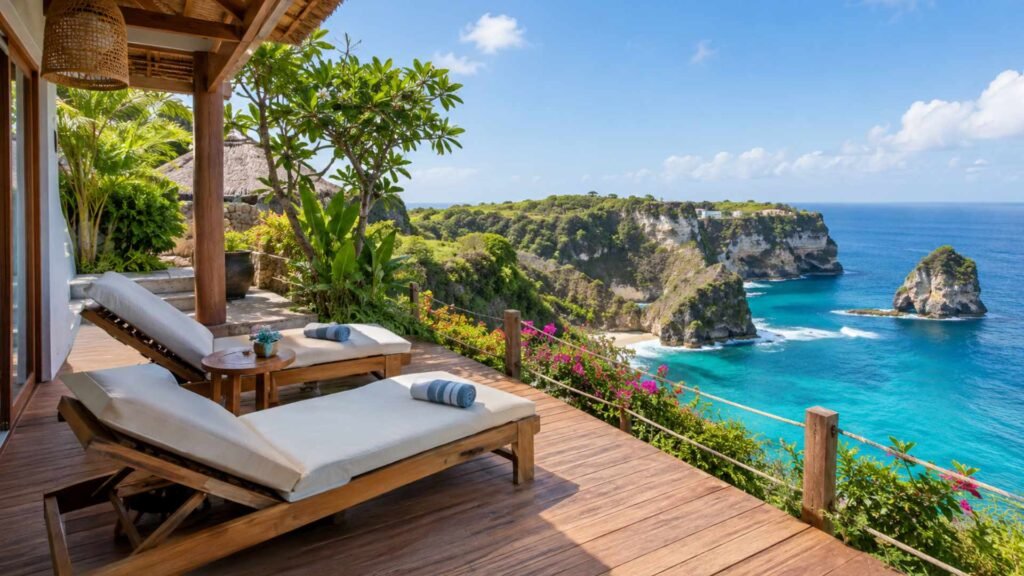
Best Hotels in Nusa Penida for Every Traveler Choosing the best hotels…