Nusa Penida Full Day Tour:…
Nusa Penida Full Day Tour: How to Make Every Stop Count Planning…
Tirta Empul Holy Spring Water Temple is one of the few places in Bali where visitors can witness living spiritual traditions that have continued for more than a thousand years. While many temples are admired for their architecture alone, Tirta Empul is best known for its natural spring, where local people regularly perform purification ceremonies as part of their religious life.
Located in Tampaksiring, northeast of Ubud, the temple welcomes travelers from around the world who want to experience Balinese culture beyond sightseeing. Whether you choose to observe the sacred rituals or respectfully take part in the purification ceremony, visiting Tirta Empul offers a deeper understanding of Bali’s Hindu traditions.
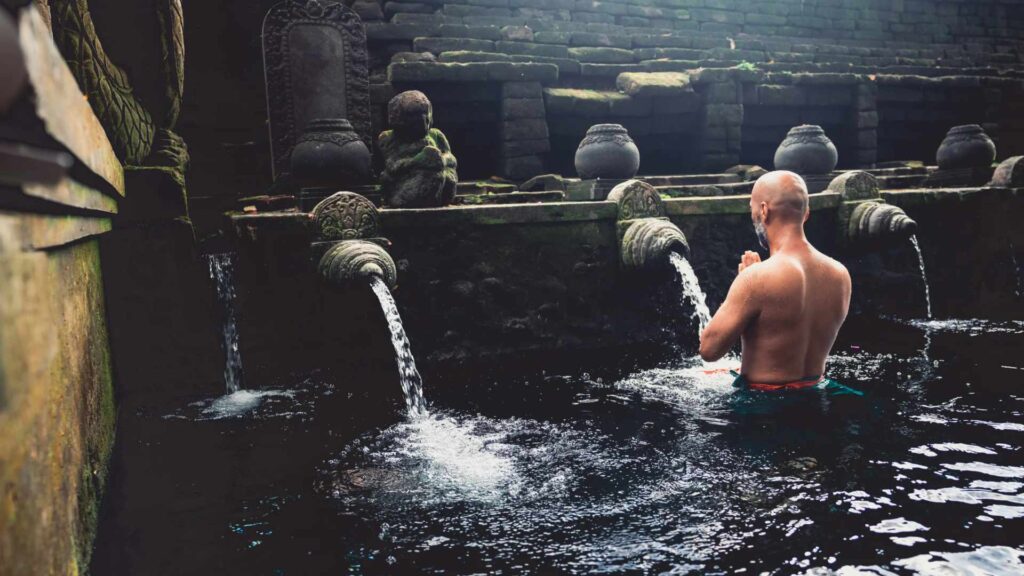
The temple is internationally recognized because of its sacred spring water, which flows naturally from underground into a series of purification pools.
For Balinese Hindus, the spring is believed to symbolize purity, balance, and spiritual renewal. The water is used daily for religious ceremonies and continues to supply nearby communities.
Unlike many historic sites, Tirta Empul remains a vibrant place of worship where local families gather for prayers, temple festivals, and important life ceremonies throughout the year.
According to Balinese mythology, the sacred spring appeared during a battle between Lord Indra and the powerful king Mayadenawa.
After Indra’s warriors were poisoned, he pierced the earth with his divine spear, creating a spring of holy water that restored their strength and purified them.
This legend remains deeply connected to the temple today, and the flowing water continues to represent healing, protection, and spiritual cleansing for the Balinese community.
The temple complex is divided into several sections, each serving a different purpose.
The crystal-clear spring can be seen bubbling naturally from beneath the temple before flowing into the purification pools.
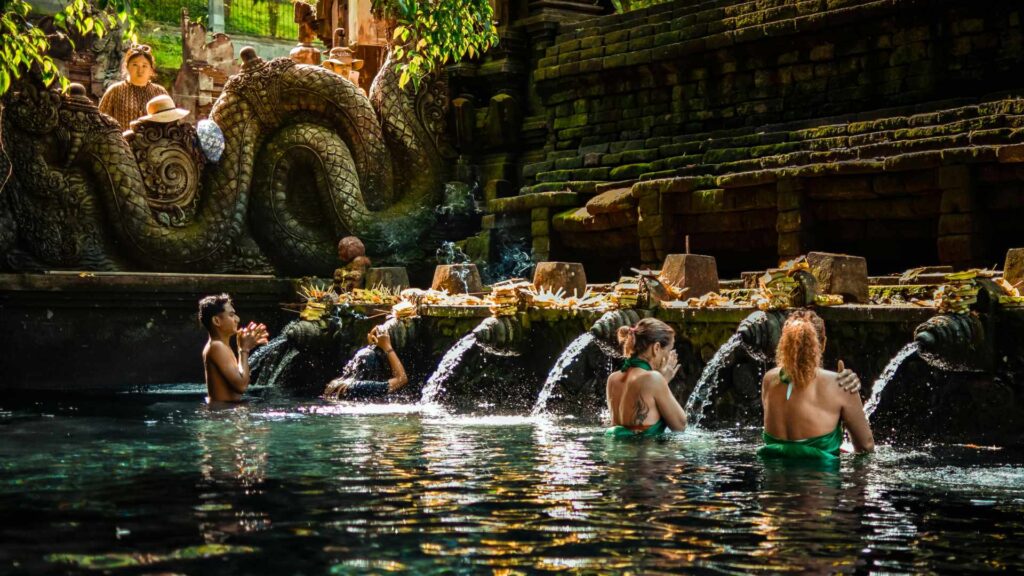
Rows of carved stone fountains continuously release holy water into bathing pools where purification rituals take place.
Each fountain has its own religious significance, although not every fountain is intended for visitors.
Traditional Balinese gateways, shrines, pavilions, and beautifully maintained gardens surround the pools, creating a peaceful atmosphere throughout the complex.
Several sections of the temple remain dedicated exclusively to worship and religious ceremonies.
Visitors are welcome to observe respectfully while following temple etiquette.
Melukat is a traditional Balinese Hindu purification ceremony that uses holy water to symbolize cleansing of negative energy and renewal of the spirit.
Although many visitors choose to participate, understanding its cultural importance is essential.
The experience is not designed as a tourist attraction but as a genuine religious practice that has been passed down through generations.
If you wish to participate, the process is generally straightforward.
Temple staff or local guides can explain which fountains visitors should use, as some are reserved for specific religious ceremonies.
Respecting local customs helps preserve the temple’s sacred atmosphere.
When visiting:
Visitors should remember that they are entering an active place of worship rather than simply a tourist attraction.
The temple is located in central Bali and can easily be reached by car.
Estimated travel times include:
| Starting Point | Estimated Time |
|---|---|
| Ubud | 30 minutes |
| Sanur | 1–1.5 hours |
| Kuta | 1.5 hours |
| Seminyak | 1.5–2 hours |
| Canggu | Around 2 hours |
| Nusa Dua | Around 2 hours |
| Uluwatu | 2–2.5 hours |
Since public transportation around Bali is limited, most travelers hire a private driver or join a private cultural tour.
This also makes it easier to visit several nearby attractions in one day.
Morning is widely considered the best time to explore Tirta Empul.
Visiting between 8:00 AM and 10:00 AM offers several advantages:
The dry season, generally from April through October, usually provides the most comfortable weather for sightseeing, although the temple remains open throughout the year.
If you visit during the rainy season, bringing a lightweight rain jacket is recommended.
One reason Tirta Empul is popular on private tours is its proximity to several of Bali’s best attractions.
Only a short drive away, Tegallalang is famous for its layered rice fields and traditional Subak irrigation system.
Morning visits provide beautiful lighting and fewer visitors.
Surrounded by lush greenery and carved into dramatic cliffs, Gunung Kawi is one of Bali’s most remarkable archaeological sites.
The walk through rice fields to reach the temple adds to the experience.
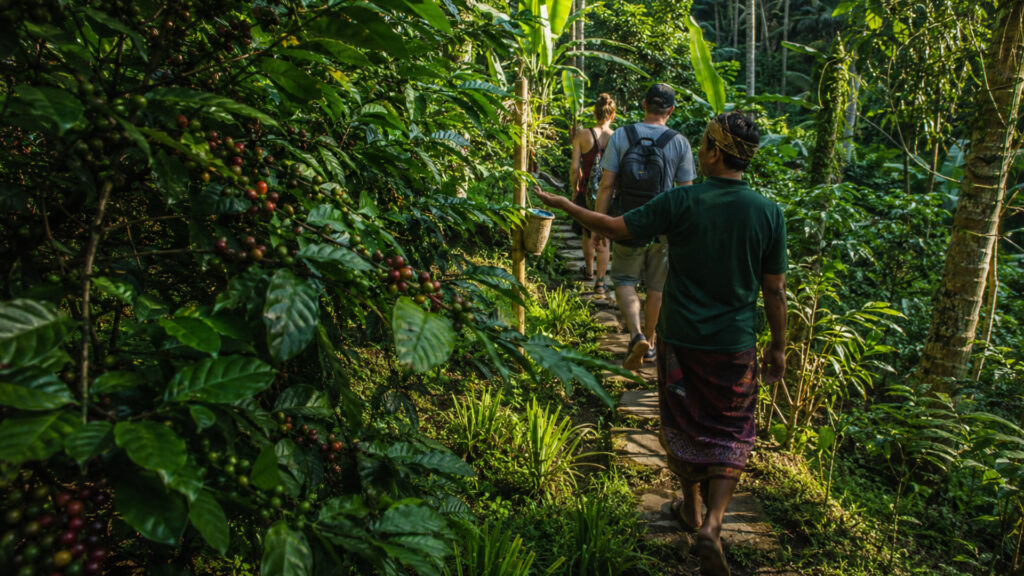
Several local plantations welcome visitors to learn about Balinese coffee cultivation while sampling freshly brewed coffee and herbal teas.
This picturesque waterfall is known for its layered rock formations and is a favorite stop for photography enthusiasts.
Water levels vary depending on the season.
Many visitors finish the day in Ubud by exploring:
A comfortable full-day itinerary could include:
08:00 – Hotel pickup
09:00 – Tegallalang Rice Terrace
10:30 – Coffee Plantation
11:30 – Tirta Empul Holy Spring Water Temple
01:30 – Lunch overlooking rice fields
03:00 – Gunung Kawi Temple
05:00 – Return to hotel
Private tours can easily adjust this itinerary depending on your interests and the day’s traffic conditions.
Before visiting, remember to:
Many travelers visit Bali for its beaches, but places like Tirta Empul Holy Spring Water Temple reveal the island’s true cultural identity.
The combination of sacred traditions, beautiful temple architecture, peaceful gardens, and living history creates an experience unlike any other destination in Bali.
Whether you visit for spiritual reflection, photography, architecture, or cultural learning, Tirta Empul remains one of the island’s most rewarding places to explore.
It is best known for its sacred natural spring and the Melukat purification ritual, where worshippers and respectful visitors cleanse themselves using holy spring water.
Yes. Visitors may participate respectfully by wearing the required temple attire and following instructions from temple staff regarding the designated purification fountains.
Most visitors spend between 1.5 and 2 hours exploring the temple, observing ceremonies, and participating in the purification ritual if desired.
Popular nearby attractions include Tegallalang Rice Terrace, Gunung Kawi Temple, coffee plantations, Kanto Lampo Waterfall, and Ubud.
Absolutely. It is one of the best places to experience Balinese Hindu culture, traditional architecture, and living spiritual practices in a respectful and accessible setting.
If you’re planning a cultural journey through central Bali, Tirta Empul Holy Spring Water Temple is a destination that offers far more than beautiful architecture. Combine your visit with nearby rice terraces, ancient temples, and traditional villages, and enjoy the flexibility of a private Bali driver to experience these remarkable places at your own pace.
Read Bali travel blog and news featuring tour tips, destination guides, local culture, and the latest updates from Bali & Nusa Penida
Nusa Penida Full Day Tour: How to Make Every Stop Count Planning…
Jimbaran Seafood Dinner: How to Plan a Relaxed Evening in Bali A…
Best Hotels in Nusa Penida for Every Traveler Choosing the best hotels…